Why I wrote Mind Your Self
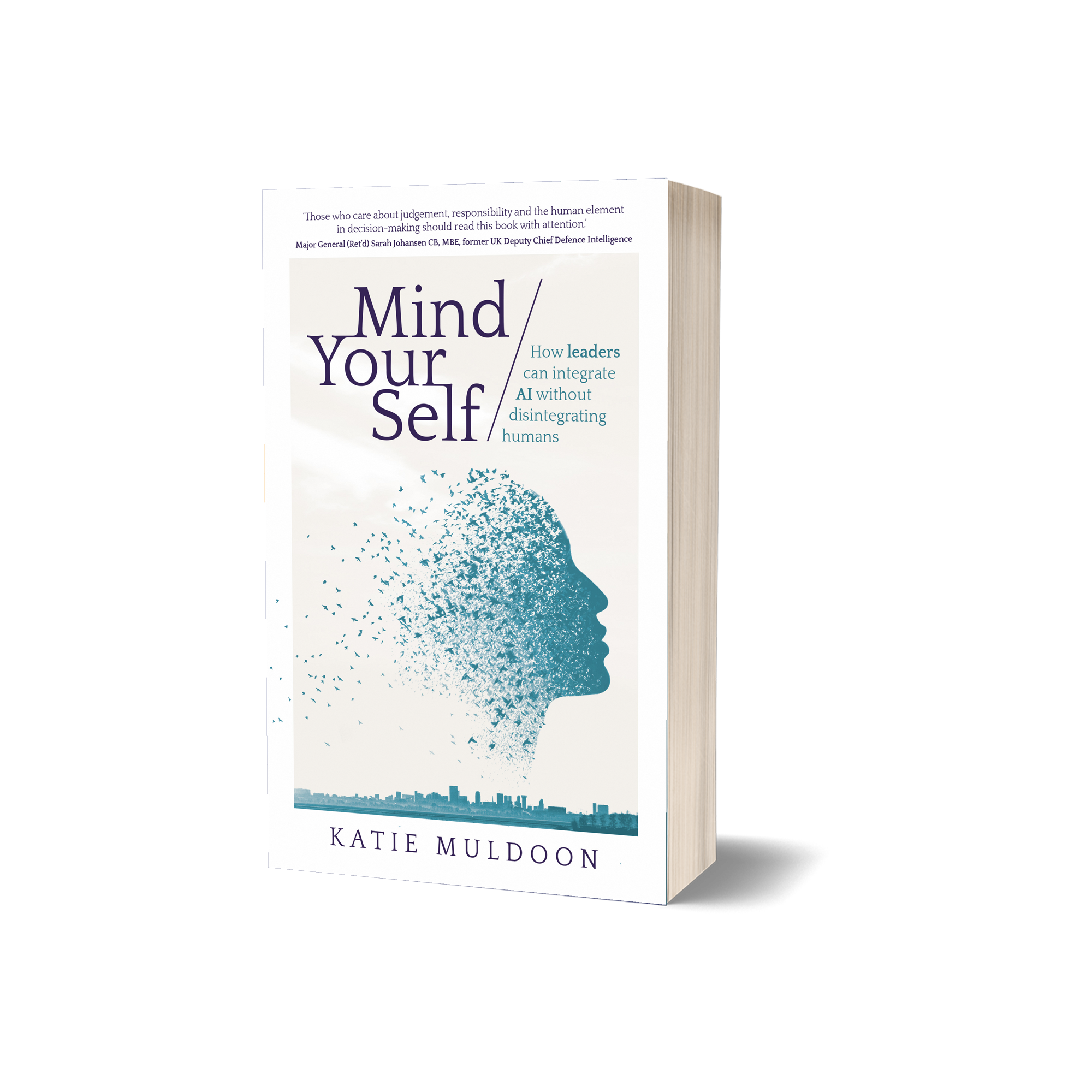
We stand at the edge of an AI revolution that will transform how we live and work, but without deliberate choice, it could erode our capacity for nuance, relationship, and courage.
In 2024, I was several years into training as a Jungian psychoanalytic therapist. Listening to those seeking help, I began to reflect on my own experience of difficulty.
Difficulty is liminal; it holds potential. You will be transformed by the experience, but how you transform is influenced by those around you, your environment, your sense of self - a dynamic process.
But I noticed something shift for patients in 2024.
Generative AI was now widely available, and people were starting to pour their hearts into it. Perhaps to avoid discomfort? Shame? The pain of not knowing? Of waiting? Perhaps because of accessibility, or because a societal system encouraged the individual over community? I noticed a subtle change in those who were using it to process their feelings.
They had answers, but not healing.
Healing is transformative and allows people to progress. They didn’t know that what heals is reciprocity between humans: recognition, lived accountability, interpersonal feedback, and genuine cohesion.
What does that mean for leaders in an AI era?
With companies having this level of access to knowledge, your human team is the differentiator. Where creativity, imagination, nuance, judgement and innovative ideas give you the edge. And for that, people need to be able to progress.
You will need to create conditions in which people can bear reality together and act responsibly within it.
And there’s no textbook for that; you are going to be pathfinders.
I can help you along the way.