
AI will undoubtedly transform how we live and work. But it does not have to diminish us.
Mind Your Self
How leaders can integrate AI without disintegrating humans.
“With each fresh AI marvel it is becoming harder to sustain the idea that we are still the most powerful and most creative intelligences on the planet. The problems AI poses for employment and cybersecurity are much discussed. Less often mentioned is the challenge AI poses to our species’ self-esteem.”
– AI hits humans where it hurts most: our ego, James Marriott, 14th September 2026, The Times
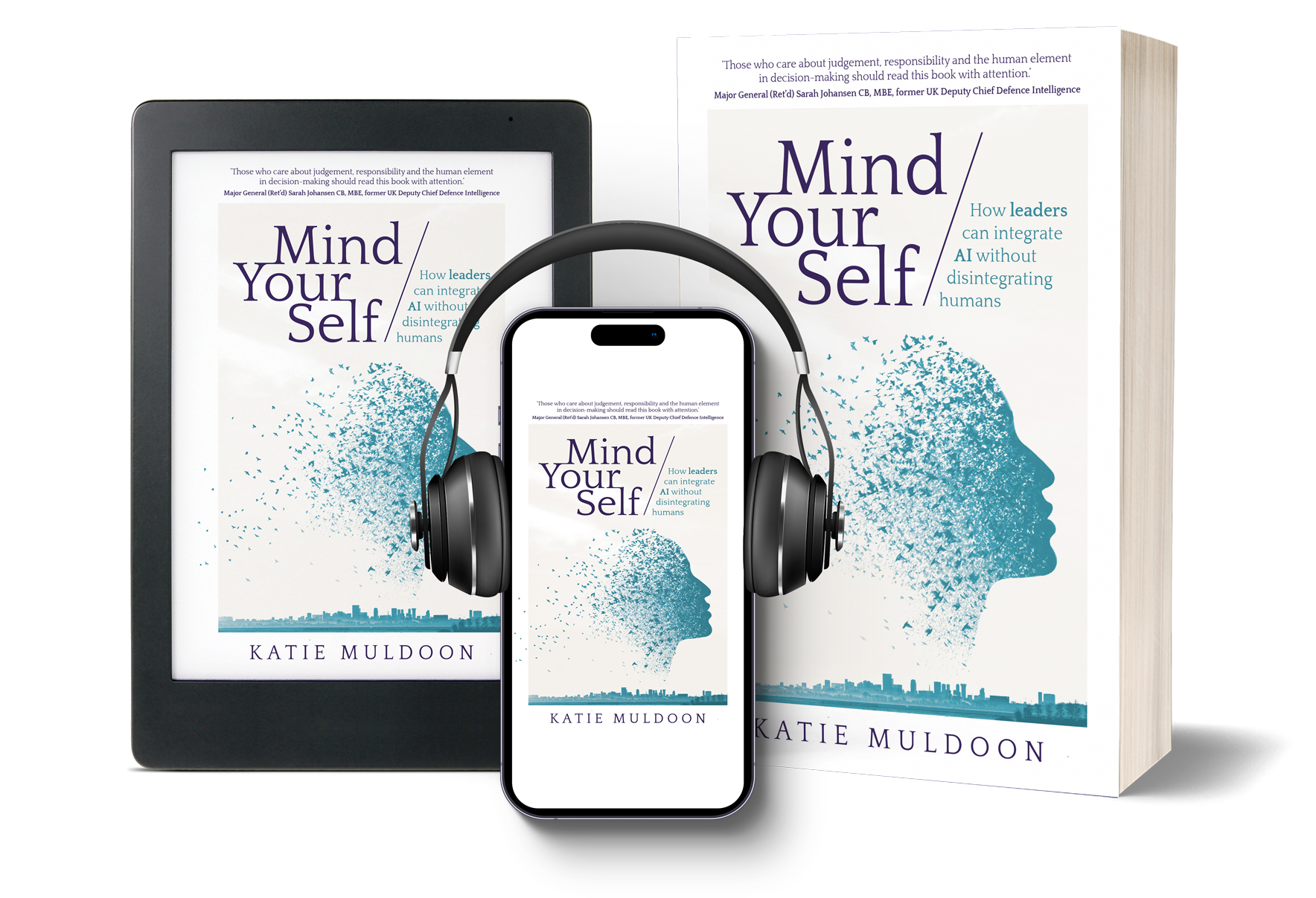
This challenge sits at the heart of my forthcoming book.
Mind Your Self: How to Integrate AI Without Disintegrating Humans.
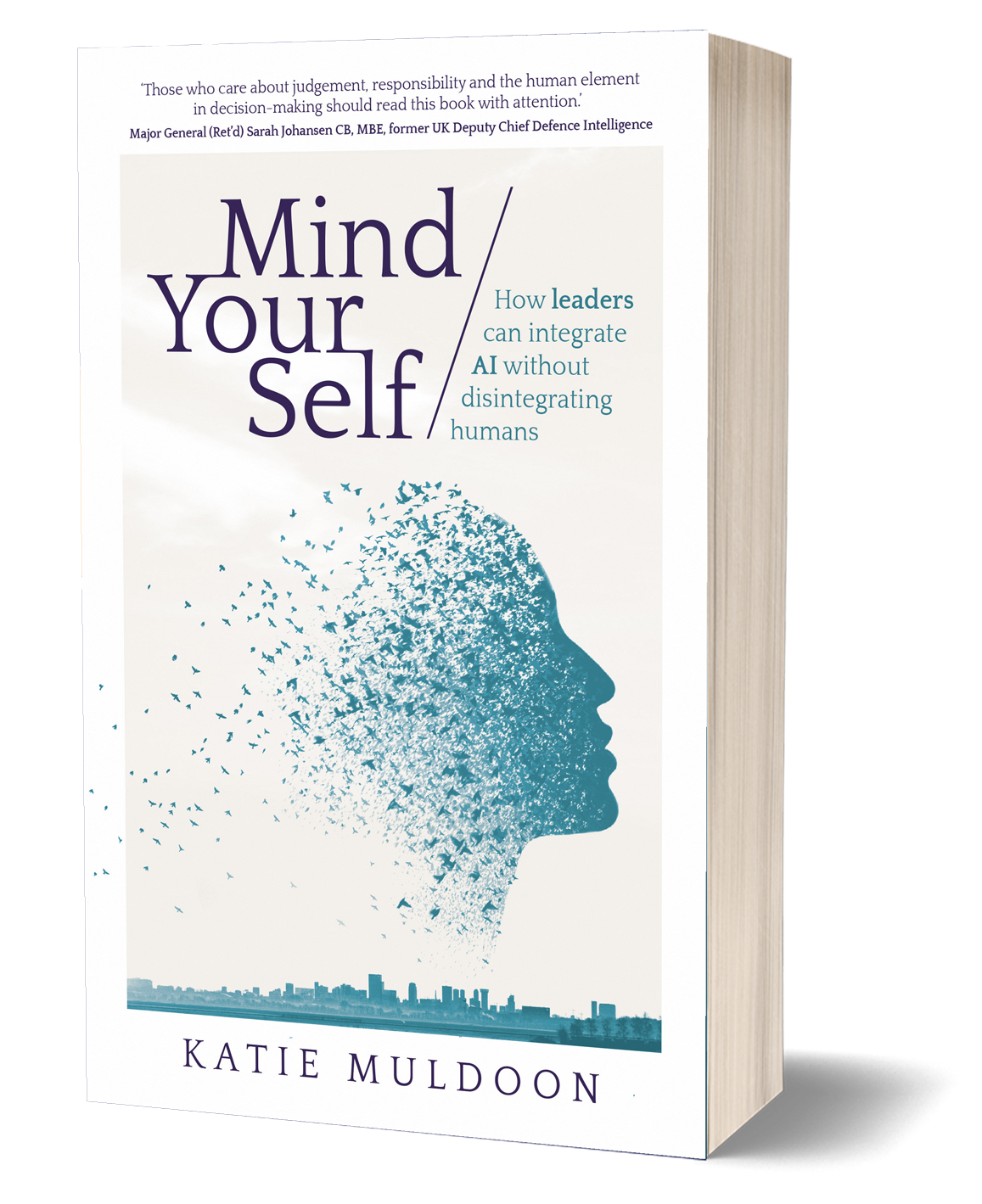
“Disintegrating” is a term associated with the psychoanalyst Donald Winnicott. It describes the fear, or experience, of losing one’s felt sense of being a whole, coherent person: when thoughts, emotions and identity begin to feel disconnected from one another.
When this happens, we may respond by trying to control uncertainty more tightly: the work, the technology, the people around us, even ourselves. Yet self-esteem does not come from denying disruption. It comes from finding ways to remain present, connected and able to choose.
AI will undoubtedly transform how we live and work. But it does not have to diminish us.
Used thoughtfully, it can invite us to become clearer about the distinctly human capacities that matter most: judgement, imagination, relationship, courage, curiosity and care.
That is the hopeful challenge: not resisting AI or surrendering to it, but learning to integrate it in ways that strengthen human wholeness rather than fragment it.